Dubai 2040 Urban Master Plan: Vision, Key Hubs, and Opportunities
Discover the Dubai 2040 Urban Master Plan and its innovative strategies for sustainable development. Learn how it aims to shape a greener future. Read more!
The dubai 2040 urban master plan is the most ambitious spatial strategy the emirate has ever adopted. Spanning 2021 to 2040, it redefines how millions of people will live, work, commute, and invest across a city that refuses to stand still. This article breaks down its pillars, key hubs, sustainability commitments, economic growth drivers, and what it all means for residents, businesses, and visitors alike.
Key Takeaways
The dubai 2040 urban master plan serves as the emirate's comprehensive future map for the next two decades, aiming to make Dubai the best city to live, work, and visit globally.
The plan targets a population of about 5.8 million residents by 2040, reshaping land use, infrastructure, and services across five urban centers.
Headline goals include reserving 60% of Dubai's area as nature reserves and rural land, expanding green spaces by 55%, and increasing public beach space by 400% compared to 2020.
Hubs such as dubai south, expo city, and dubai silicon oasis sit at the heart of innovation, logistics, and technology within the 2040 urban master framework.
The article covers quality-of-life upgrades, environmental sustainability measures, economic growth and diversification, and concrete investor and occupier opportunities across new and existing free zones.
Overview of the Dubai 2040 Urban Master Plan
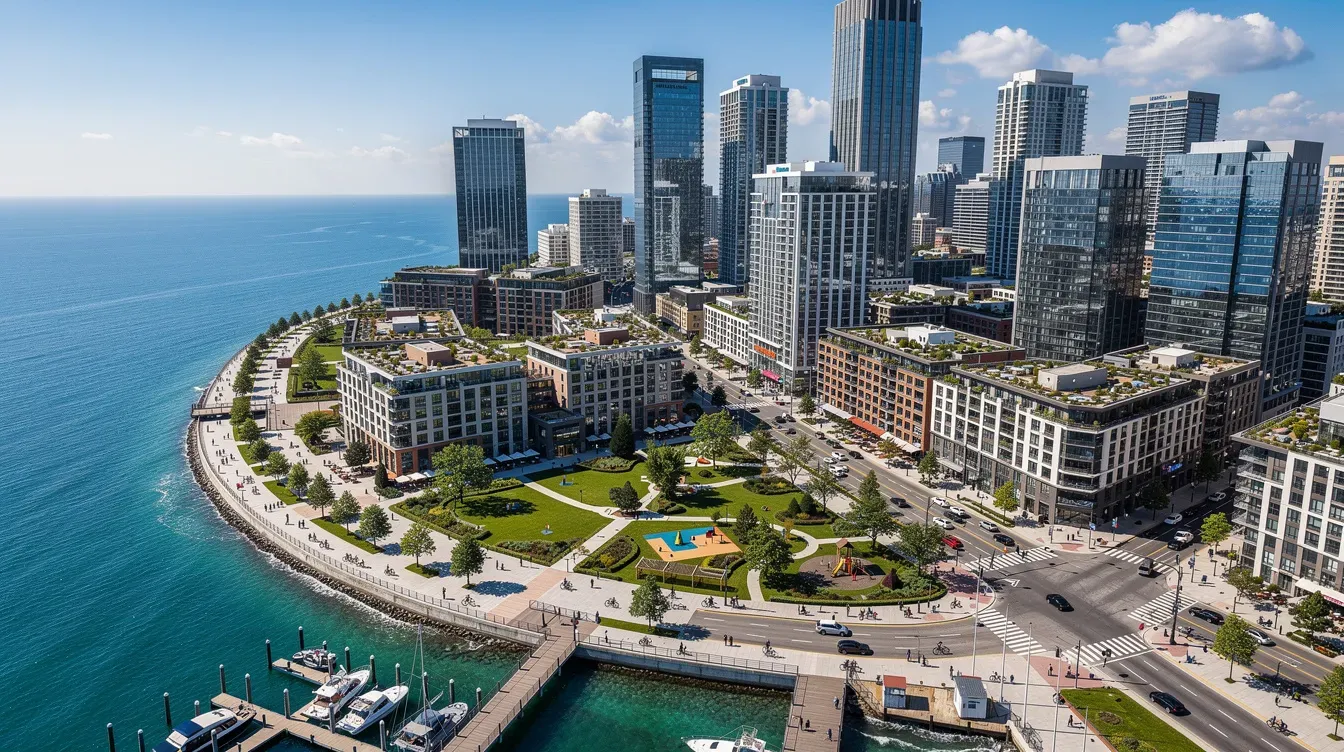
The dubai 2040 urban master plan is the seventh major citywide plan since 1960, officially launched in March 2021 under the direction of H.H. Sheikh Mohammed bin Rashid Al Maktoum, the vice president and prime minister of the UAE and Ruler of Dubai. It builds on six prior master plans that guided Dubai from a small trading port to a global metropolis.
This urban master plan is a long-term spatial and economic strategy covering land use, housing, mobility, environment, and social infrastructure up to 2040. Its headline objectives include:
Making dubai the best city for living and working globally
Doubling key economic sectors in alignment with the D33 Economic Agenda
Strengthening the emirate's role as a global hub for trade, tourism, and innovation
Population projections underpin everything. Dubai's population is projected to reach 5.8 million residents by 2040, up from about 3.3 million in 2020, while the daytime population (residents plus commuters and tourists) is expected to climb to roughly 7.8 million. The plan aims to improve quality of life, infrastructure, and environmental sustainability across the entire emirate. Core themes that run through every section include connectivity, sustainable development, the five key urban centers, and economic diversification under the dubai urban master plan.
Pillars and Strategic Objectives of Dubai 2040
The dubai 2040 urban master is built around five main pillars that guide every zoning decision, infrastructure investment, and policy direction.
Population and economic growth: Accommodating 5.8 million residents and a larger daytime population of about 7.8 million while supporting D33 targets to double economic output by 2033. The plan aims to support economic growth and create new job opportunities across sectors.
Land use and urban fabric: Focusing development into compact, mixed-use centres while protecting ecological and heritage areas, reducing urban sprawl, and optimising infrastructure investments through lower order plans and district-level frameworks.
Quality of life and lifestyle: More public parks, sports facilities, community amenities, cultural venues, and equitable access to educational and health facilities across all residential districts.
Identity, tourism, and cultural heritage: Enhancing historic areas such as Deira and bur dubai, expanding tourism districts, and promoting cultural and creative industries.
Sustainability and resilience: Protecting nature reserves and green corridors, building climate resilience, and aligning with UAE Energy Strategy 2050 and Dubai Clean Energy Strategy 2050 to reduce carbon emissions over time.
The 2040 plan emphasizes sustainable living and integrated communities across every pillar, ensuring that no single goal is pursued in isolation. These policy directions collectively aim to transform dubai into a model of sustainable urban development.
20-Minute City Concept and Mobility Improvements
A defining feature of the 2040 urban master plan is the "20-minute city" concept. Under this model, 80% of daily needs - work, school, clinics, shops, parks - should be accessible within a 20-minute walk or bicycle ride. The plan promotes a 20-minute city concept for accessibility while working to reduce reliance on private vehicles across the emirate.
Mixed-use neighbourhoods will cluster residential, commercial, and community facilities together, replacing car-dependent zoning with walkable, self-sufficient districts. The target is specific: 55% of the population is targeted to live within 800 meters of a public transport station by 2040.
Concrete mobility initiatives include:
Dubai metro blue line: A new ~30 km line with 14 stations connecting areas like International City and dubai silicon oasis, awarded in late 2024 and targeting operation by approximately 2029.
Expanded bus and tram networks with integrated ticketing across all public transport modes.
Pedestrian and cycling infrastructure: Shaded sidewalks, cycling tracks linking residential communities to metro stations and parks, and safer crossings throughout the city.
Smart mobility pilots: Autonomous transport corridors, robo-taxi testing, and flying taxi concepts aligned with Dubai's broader vision for driverless trips.
These improved infrastructure investments are designed to make the 20-minute city a lived reality rather than a planning buzzword.
Five Key Urban Centres in the Dubai 2040 Urban Master Plan
The dubai master plan consolidates urban growth into five main urban centers, each with a distinct role in economic and industrial activities, tourism, community life, and innovation. The plan includes five major urban centers designed to distribute growth and reduce pressure on any single corridor.
Three existing urban centres:
Centre | Primary Role |
|---|---|
Deira & bur dubai | Heritage, souks, traditional commerce, creek-front revitalisation |
Downtown Dubai & business bay | Global business, finance, dubai international financial centre proximity |
dubai marina & jumeirah beach residence | Waterfront living, tourism, luxury residential along sheikh zayed road corridor |
Two emerging centres:
Centre | Primary Role |
|---|---|
expo city Dubai & dubai south | Aviation, logistics, events, advanced industries near Al Maktoum Airport |
dubai silicon oasis centre & innovation corridor | Technology, R&D, startups, smart city living |
Three existing urban centers are Deira, Downtown, and dubai marina; two new urban centers are expo city and dubai silicon oasis. Urban centers will feature mixed-use spaces for residents and businesses, with density calibrated to public transport capacity and proximity to key infrastructure such as ports, airports, and highways.
The 2040 urban master plan aims to balance development between the north and south of the emirate, creating new employment clusters closer to where people live and reducing commute times for suburban residents. The plan maps growth in a way that each centre becomes increasingly self-sufficient over time.
Focus on Sustainability, Green Spaces, and Coastal Development
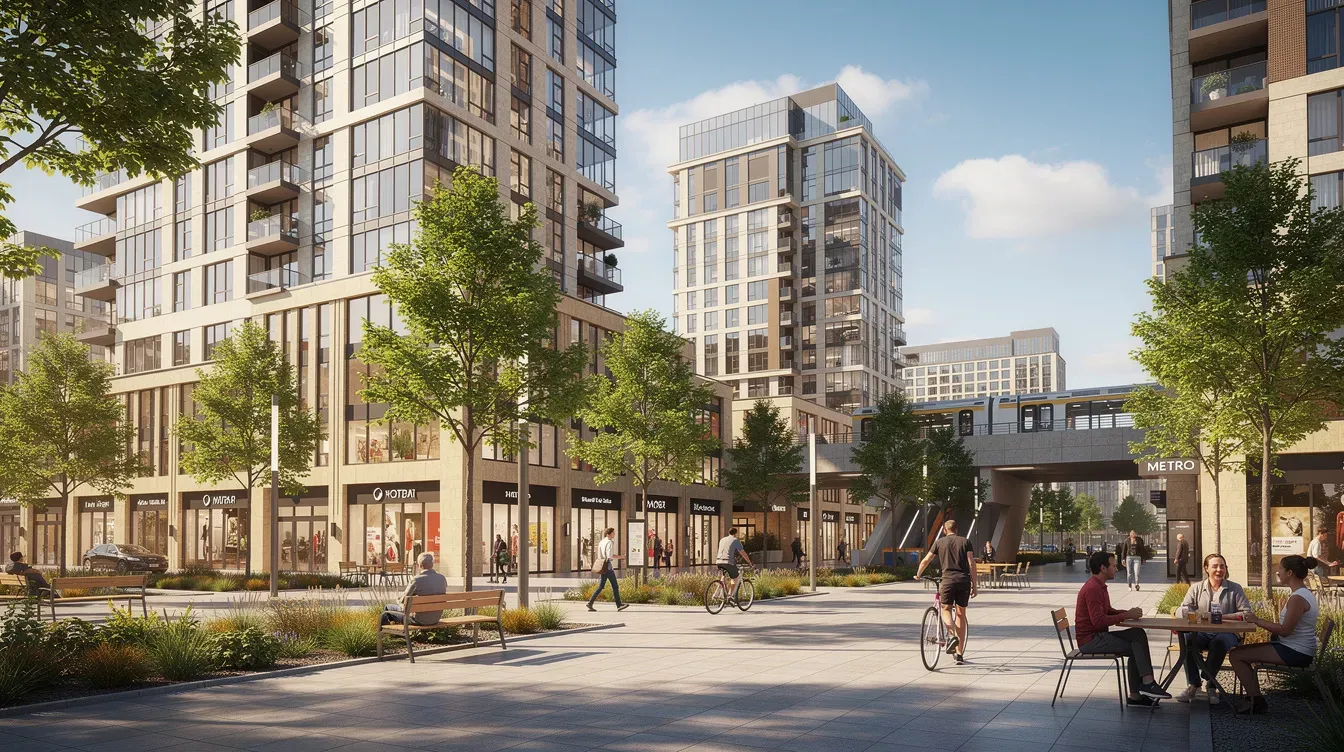
Environmental sustainability is a core theme of the dubai 2040 urban master, going well beyond aesthetics to address climate resilience, biodiversity, and public health. The plan's focus on environmental protection shapes everything from zoning to building codes.
Key commitments include:
Sixty percent of Dubai's land will become nature reserves, rural areas, and green corridors, protecting desert and coastal ecosystems as spaces designated for long-term conservation.
Green spaces and public parks are expected to increase by 105% by 2040, with the plan aiming to expand green spaces by 55% compared to 2020 baselines. Publicly accessible parks are projected to grow from about 21.7 km² to 42.8 km².
The plan will increase public beach space by 400% by 2040, expanding accessible coastline from approximately 21 km to about 105 km, with better public beaches, improved facilities, and integration with walking and cycling routes.
Public spaces and natural areas will include marine conservation zones and terrestrial ecological corridors.
Beyond land allocation, the plan encourages sustainable building practices such as district cooling, solar energy adoption, water-efficient landscaping, and green ratings for new developments. These measures support sustainable development while providing tangible recreational areas for a growing population. The dubai government has embedded measurable indicators - from urban heat island exposure to water quality - into the plan to track progress and provide sustainable outcomes over time.
Economic Growth, Free Zones, and Investment Opportunities
The dubai 2040 urban master plan is designed to underpin long-term economic growth and diversification by reshaping where and how people live, work, and invest. The global economic position of Dubai depends on continued attracting foreign investment, and this plan creates the spatial framework to do exactly that.
Free zones such as dubai south, dubai silicon oasis, Dubai Internet City, and Dubai Multi Commodities Centre are integrated into the 2040 urban master as specialised clusters supporting logistics, technology, finance, and trade. Rather than operating as isolated enclaves, free zones are embedded into transport networks, housing communities, and service infrastructure.
Projected economic land expansion:
The Dubai 2040 plan aims to increase commercial land to 168 sq.km by 2040, supporting economic and industrial activities across the emirate.
Tourism space is expected to increase by 134% by 2040, with hotel and hospitality land allocations growing to match projected visitor volumes.
Land for educational and health facilities will increase by approximately 25%.
Investment opportunities are concentrated around residential and mixed-use projects near metro lines, within the five key urban centers, and in emerging districts like expo city and dubai south. Dubai aims to attract more foreign investment through the 2040 plan, leveraging long-term visas, business reforms, and regulatory clarity under the new urban planning law. These upcoming developments signal sustained demand for freehold property and mixed-use investment across the emirate.
Spotlight on Dubai South and Expo City under Dubai 2040
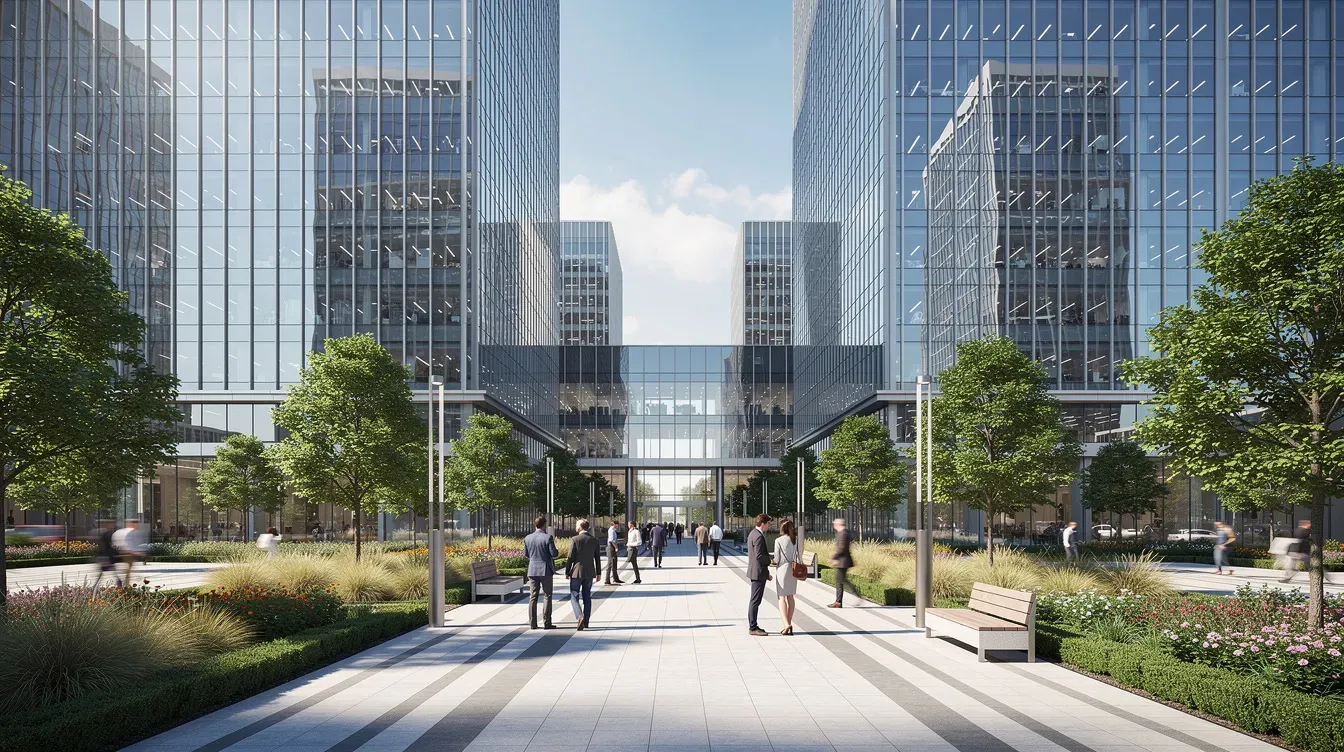
Dubai south, centred around Al Maktoum International Airport, is a cornerstone of the dubai 2040 urban master. Envisioned as a major aviation, logistics, and residential hub, it is designed to anchor the emirate's southern growth corridor.
Dubai South's components include a logistics district, an aviation district linked to the expanding airport, residential communities offering diverse housing options, and business parks. All are designed with mixed-use zoning and integrated transport connections.
Expo city Dubai, the legacy site of Expo 2020, transitions into a permanent smart and sustainable urban district. It includes offices, education and R&D facilities, residential units, and event venues. Together, these southern hubs are intended to balance the city's growth, reduce commute times for residents in newer suburbs, and create high-value employment clusters close to air and sea links.
Investors watch these areas closely because of large-scale infrastructure commitments, proximity to free zones, and the dubai government's positioning of them as engines of sustainable growth. These hubs are central to making dubai a polycentric, balanced metropolis by 2040.
Spotlight on Dubai Silicon Oasis and Innovation Corridors
Dubai silicon oasis is identified as one of the key urban centres within the dubai 2040 urban master plan, serving as a technology and innovation-focused community. The plan will create new urban hotspots like dubai silicon oasis, purpose-built for the digital economy.
As a free zone and integrated technology park, DSO hosts tech firms, startups, R&D facilities, universities, and residential neighbourhoods with smart infrastructure. It aligns with Dubai's wider digital economy agenda and the D33 Economic Agenda, supporting high-value sectors including fintech, IoT, AI, and advanced manufacturing.
Urban design within DSO emphasizes walkable campus-style layouts, co-working and incubator spaces, student housing, and community amenities that attract both talent and long-term residents. The dubai silicon oasis centre connects to other innovation corridors such as Internet City, Media City, and Dubai Design District, with the 2040 urban master planning aiming to integrate these into a coherent innovation ecosystem. This approach supports foreign investment flows into technology sectors and creates job opportunities tied to Dubai's future as a knowledge economy.
Quality of Life and Social Infrastructure Improvements
Making dubai one of the world's best city environments to live in is a central promise of dubai 2040, translating into significant upgrades in social and community infrastructure that touch people's quality of daily life.
Key improvements include:
Land allocation for education and health facilities will increase by approximately 25% by 2040, distributing schools, universities, clinics, and hospitals across established and new communities.
Neighbourhood centres, sports complexes, cultural facilities, and youth hubs will reduce the need for long commutes and foster social cohesion.
The plan supports diverse and high-standard housing solutions for the next two decades, offering a mix of villas, townhouses, and apartments at different price points to serve varied income levels and family sizes.
The plan promotes mixed-use urban spaces for self-sufficient communities, where residents can access services, retail, and recreation without leaving their district.
Health and wellbeing measures include cleaner air from reduced car dependence, more opportunities for outdoor activity in expanded public parks and recreational areas, and urban designs that support active, family-friendly lifestyles. These key initiatives are what separate this urban master plan dubai from previous iterations - the focus is squarely on how real people experience the city daily, not just on skyline aesthetics.
Heritage, Tourism, and Cultural Districts
The dubai 2040 urban master plan balances futuristic urban development with protection and enhancement of cultural and historic areas. This is not a plan that erases heritage to make room for glass towers.
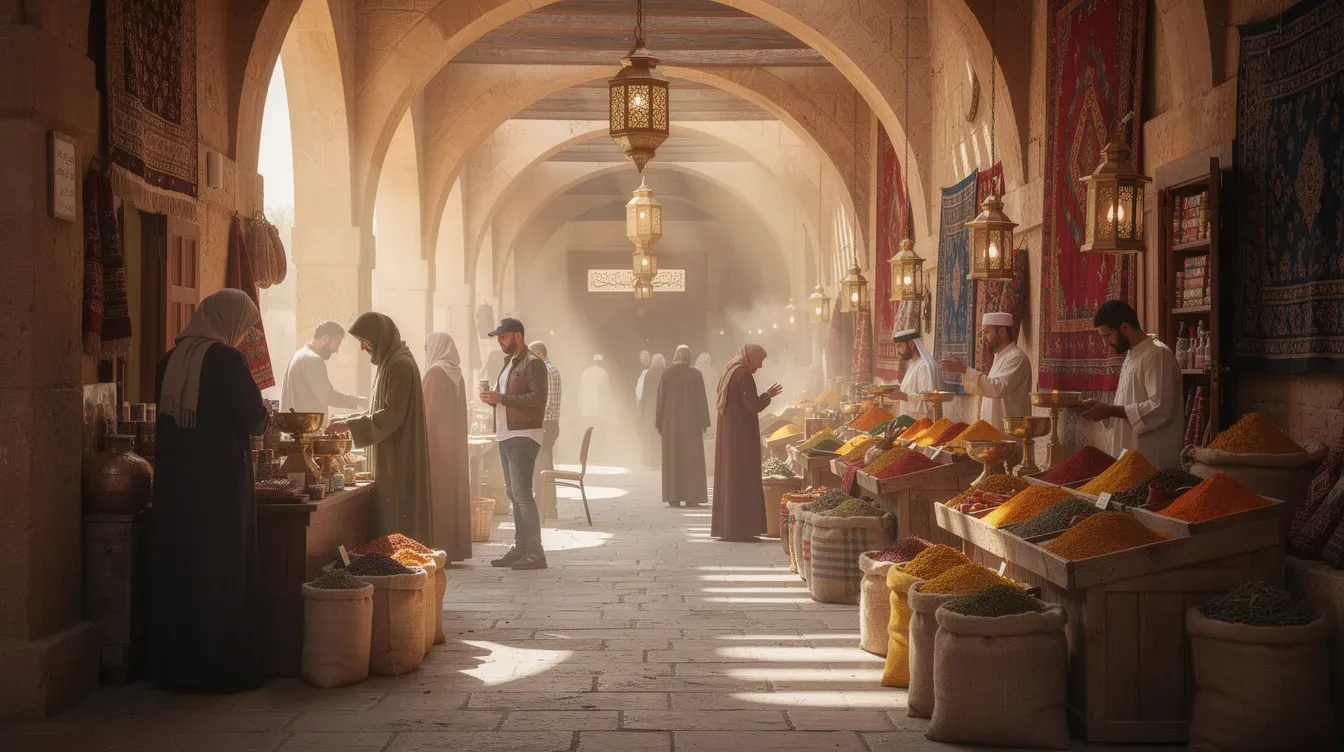
Revitalisation efforts target historic districts such as Deira, bur dubai, Al Fahidi, and the Dubai Creek area, including preservation of heritage buildings, souks, and waterfront promenades. These areas retain their character while gaining improved infrastructure, better pedestrian access, and upgraded public spaces.
Tourism and leisure growth under the plan is substantial. Expanded beachfront destinations, revamped inner-city waterfronts, and new cultural attractions will support the projected 134% increase in hotel and tourist activity spaces. Cultural and creative hubs - districts dedicated to design, art, media, and performing arts - attract creators and reinforce Dubai's future as a global creative capital.
These initiatives strengthen Dubai's global image as a safe, cosmopolitan, and culturally diverse city, drawing both visitors alike and long-term residents who want depth alongside modernity.
Implementation, Governance, and Urban Planning Law
Law No. (16) of 2023 on urban planning in Dubai establishes the governance framework needed to implement the dubai urban master plan 2040 effectively. This urban planning law gives the Structure Plan statutory force, meaning all development permits, framework plans, and lower order plans must comply.
Key governance mechanisms include:
Supreme committee for Urban Planning (SUPC): Approves the Structure Plan, supervises implementation, and monitors strategic indicators across agencies.
Dubai municipality is charged with preparing the Structure Plan and Framework Plans, ensuring consistency across development, free zones, and special development zones.
Review cycles: The Structure Plan is reviewed at least every 10 years, and Framework Plans every 5 years, allowing the uae government and dubai government to adjust priorities based on population growth, economic trends, and technological change.
Environmental assessments and heritage protection are mandatory for all new projects, even those within free zones.
Community and stakeholder engagement - consultation with developers, investors, and residents - refines zoning, infrastructure priorities, and public space design over time. Implementation is phased, with periodic reviews that keep the plan adaptive rather than rigid.
Future Outlook: Dubai 2040 and Beyond
The 2040 urban master plan positions Dubai as a global benchmark for smart, sustainable, and people-centric cities. Expected milestones include expansion of autonomous mobility, further integration of AI and data analytics into city management, continued rollout of renewable energy projects, and progressive reductions in carbon emissions.
Achieving Dubai's future targets will reinforce the city's role as a leading hub for trade, aviation, tourism, technology, and finance across the wider Middle East and globally. The diversified economic bases, sustainable infrastructure, and strong governance embedded in the plan aim to future-proof Dubai against global economic and environmental shifts.
Residents, businesses, and investors should monitor district-level plans and emerging hubs - particularly dubai south and dubai silicon oasis - to align long-term decisions with the city's evolution. The key outcomes of this plan will unfold over years, and those who position early in the right corridors stand to benefit most from the investment opportunities ahead.
FAQ about the Dubai 2040 Urban Master Plan
When was the Dubai 2040 Urban Master Plan announced and what time frame does it cover?
The Dubai 2040 Urban Master Plan was officially unveiled in March 2021 and sets out a development roadmap from 2021 through to 2040. It is the seventh development plan since 1960, building on six prior citywide plans. The plan is periodically reviewed and refined, but its core vision and targets provide long-term certainty for residents, developers, and investors.
How will the Dubai 2040 plan affect daily life for residents?
Residents can expect shorter commutes thanks to the 20-minute city model, more nearby parks and community facilities, better public transport options, and expanded access to public beaches and recreational areas. Increased distribution of schools, clinics, and retail across neighbourhoods aims to reduce overcrowding in older districts and improve service quality for everyone.
What role do free zones play in the Dubai 2040 Urban Master Plan?
Free zones remain critical engines of economic growth under the plan, attracting foreign investment, specialised talent, and global companies in sectors like logistics, technology, media, and commodities. The plan does not replace free zones but integrates them into urban fabric, transport networks, and residential communities, especially around dubai south and dubai silicon oasis.
Is the Dubai 2040 Urban Master Plan only about new construction?
No. The plan covers both new developments and the regeneration of existing neighbourhoods, especially older inner-city districts that need infrastructure upgrades and public realm improvements. Revamping heritage areas, enhancing walkability, and modernising utilities are as important as mega-projects in emerging districts.
How does Dubai 2040 address climate change and environmental concerns?
The plan increases protected natural areas to cover 60% of the emirate's land, promotes low-carbon mobility, and encourages energy- and water-efficient buildings in line with national strategies such as the UAE Energy Strategy 2050. More greenery, shaded streets, and coastal protection measures help mitigate heat, support biodiversity, and enhance resilience to environmental stresses.
Explore Metro Stations
Interchange Stations
Transfer between Red and Green lines
Total Stations: 35