Dubai Underground Metro: Routes, Timings, Stations & Future Lines (2026 Guide)
Explore the Dubai Underground Metro with our essential guide. Discover routes, fares, and tips to navigate the city easily. Read more to plan your journey!
Key Takeaways
Dubai Metro has two operational lines - Red and Green - with a combined 55 stations across roughly 90 km of track, mixing elevated viaducts with underground metro stations in central areas like Deira and Bur Dubai.
The Red Line connects Dubai International Airport directly to landmarks like Burj Khalifa and Dubai Mall, while the Green Line serves the city's historic souks, Dubai Creek, and heritage districts.
Current dubai metro timings run from 5:00 AM to midnight on most weekdays, with Friday service extending to 1:00 AM and Sunday service starting later at 8:00 AM. Schedules may change during public holidays and special events.
Two major expansion projects are underway: the Blue Line (target opening September 2029) and the fully underground Gold Line (target 2032), which will extend reach toward Dubai Creek Harbour, International City, Business Bay, and Jumeirah Golf Estates.
Fares are paid via Nol cards, which work seamlessly across metro, Dubai Tram, and public buses. Gold class cabins offer premium seating at a higher fare. The metro is typically the fastest and most economical way to travel between the airport and major tourist attractions or business districts.
Introduction to the Dubai Underground Metro
Although the dubai metro train is often associated with its sweeping elevated viaducts running alongside Sheikh Zayed Road, significant stretches of the network run underground - particularly through the dense urban cores of Deira and Bur Dubai. These underground sections form the backbone of the city's rapid transit, allowing climate-controlled travel through areas where surface disruption during construction would have been impractical.
Since its launch in 2009, the dubai metro has grown into a fully automated and driverless rapid transit system boasting a punctuality rate of 99.9%. Operated by the Roads and Transport Authority (also known as RTA), the metro system integrates with the Dubai Tram, public buses, taxis, and marine transport to create a unified network aimed at reducing traffic congestion across the city.
The Dubai Metro runs mainly on elevated viaducts and transitions underground in central areas. Major underground hubs include Union, BurJuman, and several metro stations along both the Red and Green lines. This guide covers everything you need to know in 2026: routes, underground stations, dubai metro timings, fares, gold class options, and future projects like the blue line and gold line - whether you're planning your daily commute or mapping out a weekend of tourist attractions.
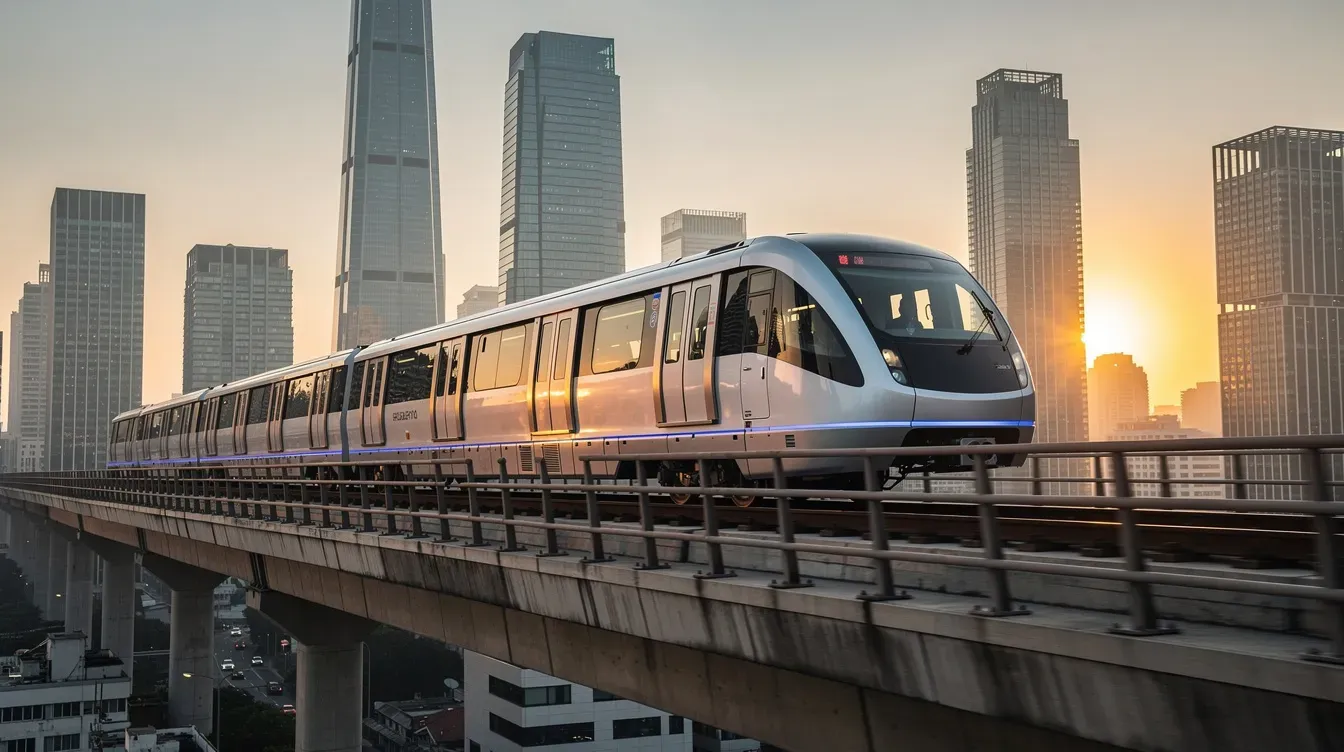
Dubai Metro Network Overview (Red & Green Lines)
As of mid-2026, the metro network operates across two lines - the red and green lines - with a combined length of approximately 89.6 km and 55 stations currently in operation.
Here is a quick breakdown of the two routes:
Feature | Red Line | Green Line |
|---|---|---|
Opened | September 2009 | September 2011 |
Length | ~67 km | ~22.5 km |
Stations | 35 | 20 |
Primary Corridor | Sheikh Zayed Road (east–west) | Deira & Bur Dubai (U-shape) |
Key Extensions | Route 2020 / Expo extension | - |
Both lines include a mix of underground and elevated segments. The underground sections are concentrated in older urban cores - Deira on the northeast side of Dubai Creek and Bur Dubai on the southwest - where tunneling beneath the surface was preferred to avoid disrupting established neighborhoods and narrow streets.
The two lines connect underground at two major interchange stations: Union and BurJuman. These multi-level complexes let riders switch between Red and Green without stepping outdoors.
The Dubai Metro connects major centers like Dubai International Airport and Burj Khalifa. Beyond those headline destinations, the metro network reaches Dubai Marina, Downtown Dubai, the historic Gold Souk, dense residential areas such as Al Qusais and Al Twar, and business districts along Sheikh Zayed Road.
Red Line: Key Underground Sections & Stations
Dubai Metro's Red Line is the busiest corridor in the network. It runs roughly parallel to Sheikh Zayed Road from Centrepoint station (formerly Rashidiya) near DXB airport in the northeast to the UAE Exchange and Expo 2020 branches in the southwest. The Red Line spans approximately 67 km with 35 stations - the majority elevated - but several strategically placed underground stations serve the central city.
Key Underground Red Line Stations
City Centre Deira (R16) - A fully underground station beneath the Deira shopping district. It serves as the gateway to City Centre Deira mall and the surrounding commercial neighborhood.
Al Rigga (R17) - Situated underground in one of Dubai's densest commercial and residential zones, close to Dubai Creek and popular budget hotels.
Union (R18) - One of the largest underground stations in the network and a critical interchange between Red and Green. Multiple levels of escalators, lifts, and concourses make this the busiest transfer point.
BurJuman (R19) - The second interchange between the two lines, located beneath BurJuman Centre mall. Another multi-level underground complex with direct access to shopping and dining.
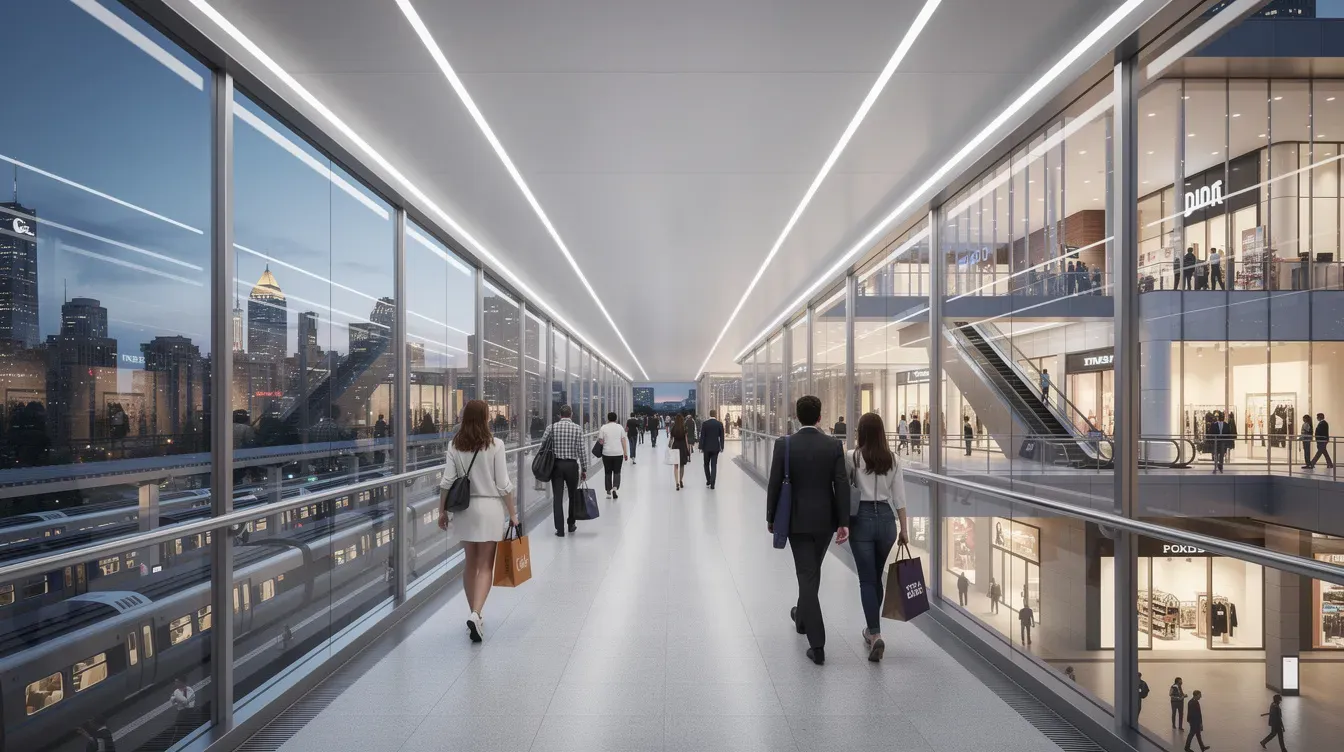
These red line stations allow commuters and visitors to move through central Dubai without exposure to outdoor heat. From the underground segment, riders can reach Dubai Mall by continuing on the Red Line to the Burj Khalifa/Dubai Mall station (R25) and using the air conditioned comfort of the Metro Link Bridge - a covered, climate-controlled walkway leading directly into the mall complex. The World Trade Centre and Financial Centre stations are also on the Red Line, making it straightforward to access key business districts while staying underground or elevated the entire way.
Airport Access on the Red Line
The Red Line opened with direct service to Dubai International Airport via Terminal 3 (R13) and Terminal 1 (R14). While these airport stations are elevated rather than underground, they sit on the same line as the underground central stations. Passengers arriving at the international airport with luggage can board the metro train and reach Downtown Dubai in approximately 25–30 minutes or Dubai Marina in around 45 minutes - all without negotiating road traffic.
If you are traveling with heavy luggage during peak hours, allow an extra 10–15 minutes for navigating escalators and platforms at busy underground interchanges like Union or BurJuman.
Green Line: Underground Core & Historic District Access
The Green Line runs in a U-shape from Etisalat by e& station in the northeast to Creek station near Al Jaddaf, passing through some of the oldest and most culturally rich parts of the city. Its underground stretches run beneath the historic fabric of Deira and Bur Dubai, where surface construction would have disrupted heritage zones and narrow souq lanes.
Important Underground Green Line Stations
Baniyas Square (G21) - Serves the heart of Deira's commercial district, surrounded by hotels, electronics shops, and currency exchanges.
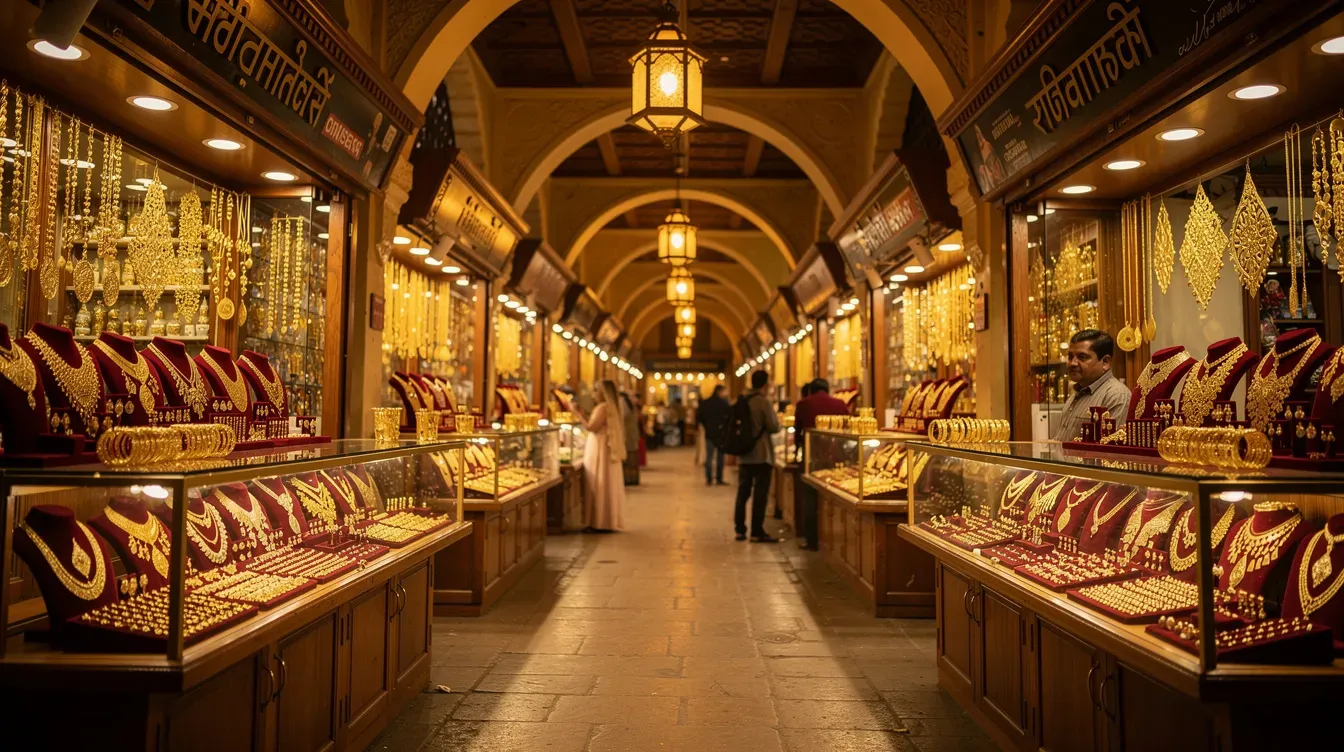
Gold Souq (G22) - Named for the iconic market, this station places visitors steps away from the traditional gold, spice, and textile markets along Dubai Creek.
Al Ras (G23) - Provides access to the Al Ras heritage area and the Dubai Museum vicinity.
Al Ghubaiba (G24) - A key station connecting to the Al Ghubaiba bus terminal, where intercity buses from Abu Dhabi arrive. It also sits near the abra (water taxi) crossings on Dubai Creek.
Sharaf DG (formerly Al Fahidi) - Serves the Al Fahidi Historical Neighbourhood, with its wind-tower houses and galleries.
These underground stations make it easy to explore traditional markets, museums, and the city's historic creek-side neighborhoods during summer, minimizing outdoor walking when temperatures regularly exceed 45°C. The platforms sit below street level, with entrances integrated into covered street-fronts or connected to nearby buildings.
Transfer between Red and Green is seamless at Union and BurJuman. Both are multi-level underground complexes with multilingual wayfinding signs (English and Arabic), escalators, and lifts. You never need to exit to the surface to switch lines.
Future Underground Expansion: Blue Line & Gold Line
Dubai is significantly expanding its underground metro network through two confirmed projects that will reshape the city's transportation landscape over the next decade.
Blue Line (Target: September 2029)
The blue line, officially approved in November 2023, will add approximately 30 km of new track with 14 stations. It features a mixed alignment: about 15.5 km underground with 5 underground stations and 9 elevated stations. The Blue Line is expected to open in 2029, covering 30 km.
Key areas served will include:
Dubai Creek Harbour (home to the planned Emaar Station, projected to be 74 metres tall - potentially the world's tallest metro station)
Silicon Oasis and Academic City
Al Warqaa and Mirdif
International City
The blue line will interchange with the Red Line at Centrepoint station and with the Green Line at Creek station (Al Jaddaf), creating new cross-network connections.
Gold Line (Target: September 2032)
Approved in April 2026, the gold line will be Dubai's first fully underground metro line. The Gold Line will span about 42 km and open in 2032, running through 18 stations at depths reaching 40 metres below the surface.
The gold line connects Al Ghubaiba (Green Line interchange) to Jumeirah Golf Estates, passing through Business Bay (Red Line interchange) and linking with Etihad Rail for future regional connectivity. The investment totals AED 34 billion, and projected ridership by 2040 is approximately 465,000 passengers per day.
Together, these new lines will ease congestion on existing corridors, bring more neighborhoods within walking distance of a station, and significantly increase underground coverage. The vice president and prime minister of the UAE have emphasized that these projects support Dubai's long-term vision for sustainable urban mobility.
Dubai Metro Timings & Service Frequency (2026)
Understanding dubai metro timings is essential for planning your journey, especially if you are catching a first train or making a late-night connection.
Standard Operating Hours
Day | First Train | Last Train |
|---|---|---|
Monday – Thursday | 5:00 AM | Midnight |
Friday | 5:00 AM | 1:00 AM |
Saturday | 5:00 AM | Midnight |
Sunday | 8:00 AM | Midnight |
Dubai Metro operates from 5 AM to midnight on weekdays. On Fridays, the metro runs from 5 AM to 1 AM. On Sundays, the metro opens at 8 AM and closes at midnight. Operating hours may extend during public holidays, major events, and celebrations such as Eid, National Day, and New Year's Eve.
Exact first and last train times vary by destination station - terminus stations like Centrepoint or UAE Exchange see the earliest departures, while intermediate stations see all the trains pass through slightly later. The Dubai Tram has slightly different but coordinated operating hours with the metro at shared tram stations.
Train Frequency
During peak hours (roughly 6:00–10:00 AM and 4:00–8:00 PM), trains arrive every 2–4 minutes on the Red Line and every 3–5 minutes on the Green Line. Off-peak frequency drops to every 5–7 minutes, and late-night intervals stretch to 8–10 minutes. Normal service frequency may be slightly reduced on weekends.
During special events, Ramadan, and public holidays, timings may shift. Always verify your schedule on the RTA S'hail app or official website before a late-night journey.
Tickets, Fares, Zones & Gold Class
Nol Card Basics
Nol Cards enable seamless payments across different modes of Dubai public transport - metro, tram, public buses, and even some marine transport services. Cash and bank cards are not accepted directly at fare gates. Nol Cards are required for fare payment on the metro.
You can purchase and top up Nol cards at vending machines and ticket offices inside any metro station, or via the RTA/Nol mobile app.
Fare Structure
Dubai Metro fare depends on the number of zones traveled. The city is divided into multiple fare zones, and the price increases with the number of zones you cross.
Trip Type | Silver Card Fare |
|---|---|
Within 1 zone (under ~3 km) | AED 3 |
2 zones | AED 5 |
Cross-city (maximum) | AED 7.5 |
Day Pass (unlimited travel) | From AED 20 |
The cheapest ticket costs 3 AED for under 3 km. The most expensive single trip ticket costs 7.5 AED. Day passes start from 20 AED for unlimited travel - worthwhile if you plan multiple rides in a day.
Gold Class
A gold class Nol card grants access to premium cabins at the front of each metro train, featuring wider seating and fewer passengers. Gold class fares are roughly double the silver card rate, but use the same fare gates and card readers.
Concessions
Children under 5 years travel for free on the metro.
People of determination travel free with a special Nol Card.
Students and seniors benefit from discount schemes through dedicated Nol card types.
Using the Dubai Underground Metro: Step-by-Step
Here is how to ride the dubai underground metro from start to finish:
Get a Nol card. Purchase or top up at any station's vending machines or ticket office. Ensure your balance covers the zones traveled for your planned route.
Enter the station. Tap your Nol card at the fare gates. In underground stations, you will descend via escalators, stairs, or elevators from street level to the concourse and then the platform.
Find your platform. Follow directional signage for the correct line (Red or Green) and direction. Display boards and audio announcements in English and Arabic indicate the next train and its terminal station. Route maps are posted inside stations and trains.
Board the correct cabin. Watch for signage indicating gold class, Women & Children cabins, and standard Silver cabins. Dedicated spaces for wheelchair users are clearly marked.
Exit at your destination. Tap out at the fare gates - this lets the system calculate your fare based on zones traveled.
Etiquette and Rules
No eating, drinking, or smoking on trains or in stations.
Respect carriage segregation: gold class, Women & Children, and standard cabins.
Keep luggage within RTA size limits and avoid blocking doors, especially at busy underground stations during peak hours.
For route planning, the RTA S'hail app and Google Maps both support metro routes in Dubai, showing transfers, dubai metro timings, and walking connections. Each station has maps displayed at platform level.
Dubai Metro, Tram & Airport Connections
Airport to City
The Red Line connects directly to Dubai International Airport via Terminal 1 (R14) and Terminal 3 (R13). Approximate travel times from the airport:
To Downtown Dubai / Burj Khalifa: ~25–30 minutes
To Dubai Marina: ~45 minutes
This is typically faster and far cheaper than a taxi, especially during heavy traffic congestion periods.
Dubai Tram Integration
The Dubai Tram runs along Al Sufouh Road, covering Dubai Marina, JBR, and Knowledge Village. It interchanges with the Red Line at DMCC and Sobha Realty metro stations. A single Nol card works across metro and tram - just tap in and tap out on each mode.
Getting to Dubai Mall
Take the Red Line to Burj Khalifa/Dubai Mall station (R25) and follow the air-conditioned Metro Link Bridge directly into the mall complex. The entire walk is covered and climate-controlled.
Coming from Abu Dhabi
Travelers from Abu Dhabi can take intercity buses arriving at Ibn Battuta or Al Ghubaiba bus terminals. From Ibn Battuta, connect to the nearby Red Line station. From Al Ghubaiba, transfer to the Green Line. Both options feed you into the broader metro network for onward travel through Dubai's underground and elevated segments.
Accessibility, Safety & Onboard Experience
Accessibility
Accessibility features are included for passengers with disabilities across every part of the network:
All metro stations are wheelchair accessible with elevators.
Trains include dedicated spaces for wheelchair users.
Tactile guidance paths assist visually impaired passengers throughout stations and platforms.
All Dubai Metro stations have elevators for accessibility, alongside ramps and step-free pathways.
The Dubai Metro features dedicated cabins for women and children.
Safety Systems
Platform edge doors are installed for passenger safety at stations - both underground and elevated - preventing falls and maintaining climate control.
CCTV is operational throughout the entire metro network.
Emergency intercoms are available on platforms and inside trains.
Station staff are present at major underground hubs and interchanges.
Clear evacuation signage and ventilation systems are built into all underground stations.
Onboard Facilities
Wi-Fi is available across all Dubai Metro stations and trains (WiFi UAE / du), providing wi fi connectivity for commuters.
All Dubai Metro stations are air-conditioned, including platforms, concourses, and entrance halls - delivering air conditioning that keeps temperatures comfortable regardless of the outdoor heat.
Clean restrooms, small shops, ATMs, and information desks are available, especially at interchange and airport stations.
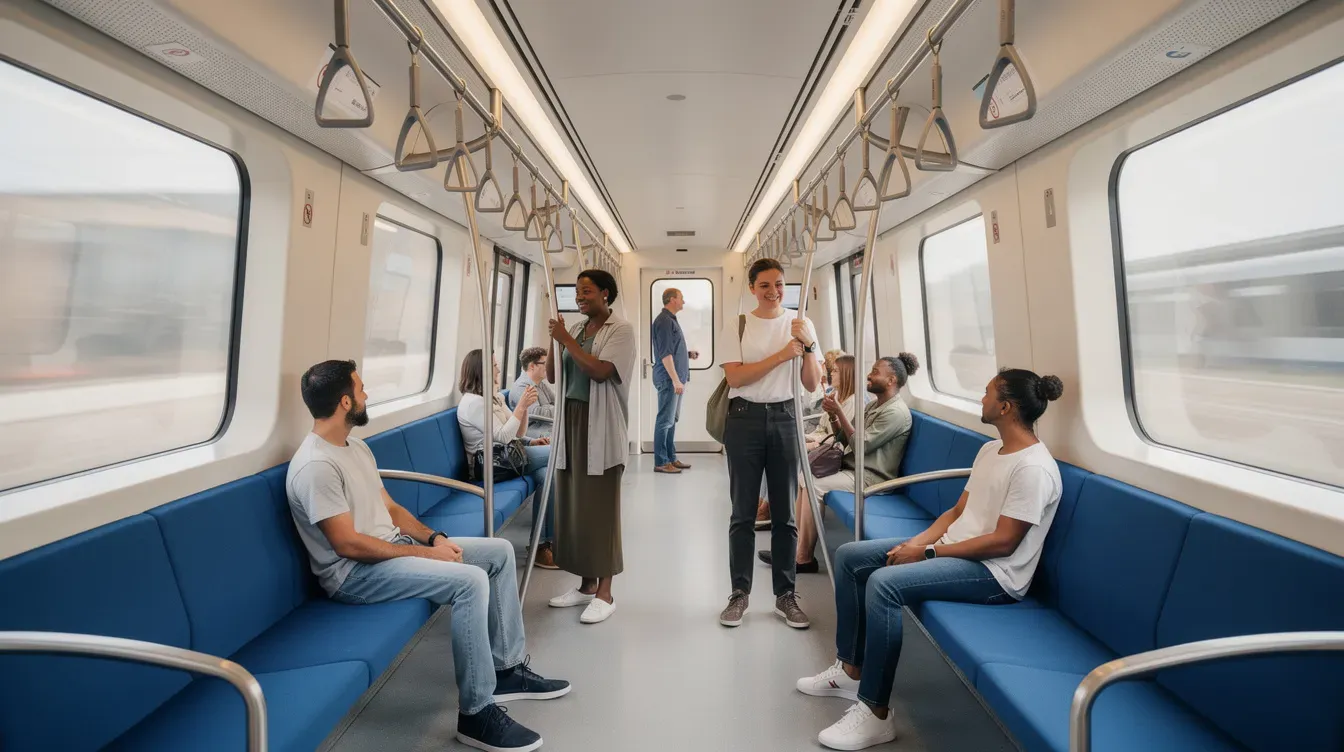
Cabin layout: gold class at the front, Women & Children car, and standard Silver section. Signage in Arabic and English marks class boundaries clearly.
Each station has ticket vending machines and Nol card top-up machines, ensuring you can manage your fare before boarding.
FAQ – Dubai Underground Metro
Is the entire Dubai Metro underground?
No. Only certain stretches and stations are underground, concentrated in central areas like Deira and Bur Dubai. Much of the Red and Green Lines runs on elevated viaducts along major roads such as Sheikh Zayed Road. Prominent underground stations include Union, BurJuman, City Centre Deira, Al Rigga, Baniyas Square, Gold Souq, Al Ras, and Al Ghubaiba. Outside the city centre, most stations are elevated or at-grade. The dubai metro rails run above ground for the majority of their length, transitioning underground where the urban density required it.
How early should I arrive at an underground station before my train?
Plan to arrive 5–10 minutes before your planned departure. Underground stations often have multiple levels - street entrance, concourse, and platform - plus fare gates and escalators that take time to navigate. During weekday peak hours or when traveling with luggage to or from the international airport, add an extra 10–15 minutes. Remember that last trains depart from terminus stations earlier than the official station closing time to allow all the trains to complete their full journeys.
Are underground metro stations cooler than outside during summer?
Yes. All Dubai Metro stations, especially underground ones, are fully air-conditioned and kept at comfortable temperatures year-round. This provides significant relief during summer when outdoor temperatures regularly exceed 45°C. Many underground stations also connect directly to malls or enclosed walkways, meaning you can travel from a metro platform to a shopping centre or hotel lobby without stepping outside into the heat. This air conditioned comfort is one of the key advantages of the underground sections.
Can I use the same Nol card on Dubai Metro, Tram and buses?
A single Nol card works across Dubai Metro, Dubai Tram, public buses, and many marine transportation services. Make sure to tap in and tap out on every mode so the fare system correctly calculates charges based on zones traveled and transfer windows. This makes the Nol card the simplest way to manage all your transportation needs across the city without carrying cash.
Will the future Blue and Gold Lines affect current metro timings?
While detailed integrated schedules will be announced closer to the 2029 and 2032 opening dates, the transport authority is expected to coordinate timings across all lines to maintain or improve current frequencies. New underground interchanges at Centrepoint, Creek, and Business Bay will redistribute passenger loads, which could support even shorter intervals on existing lines. If you are planning long-term decisions - whether a move, an investment, or a business location - near planned stations, follow official RTA updates for final route maps, service intervals, and first/last train times as the red line extension and new lines take shape.
Explore Metro Stations
Interchange Stations
Transfer between Red and Green lines
Total Stations: 35